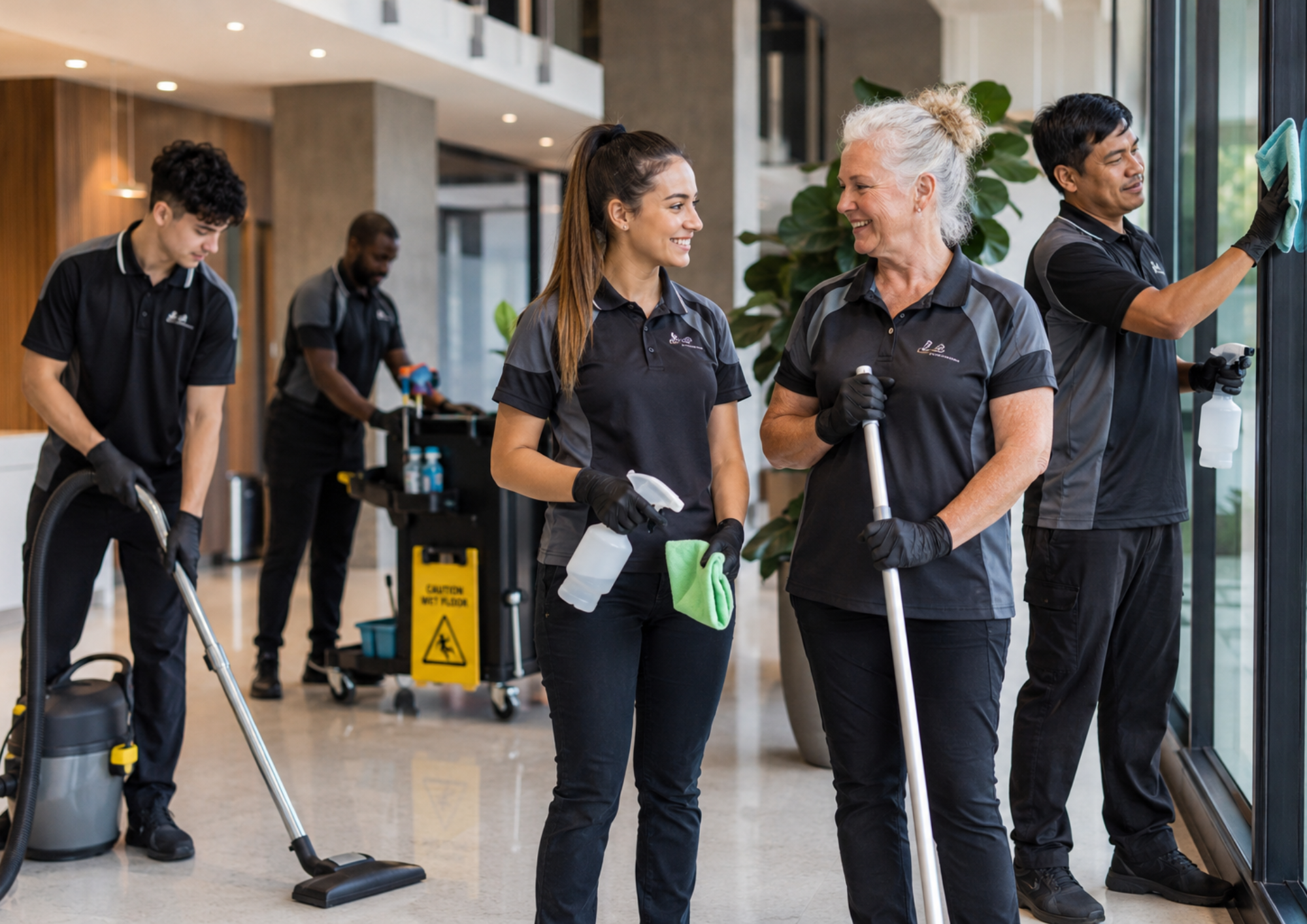
Australian cleaning and facility management businesses now field workforces spanning several decades of working life, and getting the mix right has become a genuine leadership challenge rather than a passing HR talking point. Long-serving cleaners who built careers on pride in the job now work alongside younger staff who arrived with very different expectations of what a satisfying career looks like. Treating every generation the same way is proving to be the wrong starting point for many operators.
That variety directly plays out in the training room, according to Master Cleaners Training Institute (MCTI, which is part of CrestClean) general manager training, safety and wellbeing Liezl Foxcroft. On any given week, MCTI may be inducting a school leaver on their first job alongside a career-changer in their 50s who has spent decades in hospitality, manufacturing or another industry entirely. Both are learning the same skills, but Foxcroft is clear they are not always learning them the same way, and that difference is reshaping how the industry approaches training altogether.
While consistency in standards still matters, the approach used to get there requires flexibility depending on who is being led. Experienced cleaners often entered the trade because they genuinely enjoyed the work, taking pride in maintaining buildings and solving problems. Many see the industry as dependable, long-term employment. Younger workers have grown up with social media presenting flexible, visible and entrepreneurial roles as the markers of success, which means the steady, behind-the-scenes nature of cleaning work is not always obvious as a pathway to genuine purpose or progression.
Technical skill comes easily, workplace habits take longer
Foxcroft’s experience on the training floor substantiates this. She says younger entrants tend to pick up new equipment, apps and digital checklists quickly, and they are comfortable being shown something once via video or a quick demonstration before having to fend for themselves, often arriving at training having already watched the videos or completed the online portion beforehand.
Foxcroft says it’s outside the technical elements where younger trainees need more support. “We see them needing more support in the ‘soft’ fundamentals of the job, like time management, reliability, communication with clients and understanding why a task matters, not just how to do it,” she asserts. “For many of these workers, cleaning is their first job altogether, so training has to build basic workplace habits at the same time as technical skill.”
Conversely, career-changers and older recruits tend to arrive with well-formed habits. Foxcroft says this group is likely to be more comfortable asking questions and more attuned to customer service expectations. They often bring transferable experience from previous industries. Where this cohort typically needs more support is with new technology, including rostering apps, digital audit tools and chemical dilution systems, alongside unlearning habits picked up in earlier roles. They also respond well to understanding the reasoning behind a standard, particularly around health and safety or infection control, instead of simply following a checklist.
Neither group is harder to train than the other, according to Foxcroft; they simply need the emphasis placed differently. This is why MCTI has moved towards modular, flexible training formats over a single one-size-fits-all induction.
Career pathways need spelling out early
That purpose exists within the industry, but it needs to be communicated more deliberately to younger recruits than assumed. Younger employees benefit from a clear picture of where a role can lead, not just what it involves today – understanding the broader impact facility services have on schools, stadiums and commercial buildings can help connect entry-level work to something bigger. Experienced staff, meanwhile, can be encouraged to see themselves as mentors and industry experts whose knowledge shapes the next generation, giving long-serving cleaners a fresh sense of value beyond simply clocking in.
One practical starting point is raising career goals during recruitment itself, well before an offer is made. Asking a candidate where they see themselves in the role after three months opens a conversation about growth for younger applicants, while for more experienced candidates it signals that their motivation and potential are genuinely valued by the business.
Melissa Behrend, director of HR On Call, sees this pattern consistently across her placements in the cleaning and facility services sector. She says younger generations of employees tend to want a very structured career pathway, one which is granular in nature, setting out exactly what they need to do to progress. “They want to know what they have to do to get to the next step, the next stage, all of which align to title and salary changes,” Behrend says.
Supervisor pathways are becoming a retention tool
That appetite for progression is showing up strongly in what businesses are now asking for. Where businesses once came to the Institute purely for entry-level induction, Foxcroft says more are now asking specifically for pathways that take experienced cleaners into team leader, quality auditor or mentor positions.
“This has accelerated noticeably since the industry-wide staff shortages of the past few years, as businesses have realised it’s often faster and more cost-effective to grow their own supervisors than to recruit external managers who lack cleaning-specific knowledge,” Foxcroft says.
Retention sits behind much of that demand too. In a tight labour market, a genuine progression pathway from cleaner to trainer or supervisor has become an important tool for keeping good people. Foxcroft says she is now building coaching and mentoring content that is far more structured than it was even three or four years ago specifically to meet this need.
Communication style is where the gap shows most
Once a team is in place, day-to-day management benefits from the same kind of flexibility. Younger staff who are used to fast feedback and quick digital contact often respond well to frequent check-ins and clear instruction, while experienced staff may pick up the physical demands of a role quickly, but need more support when new technology or digital systems are introduced. Communication preferences follow a similar pattern, with younger workers generally comfortable messaging or emailing and older workers placing more value on face-to-face conversation. Neither approach is inherently the better one.
Foxcroft says the real gap between generations entering the cleaning workforce today is not technical ability at all, it is expectations around how training and feedback should be delivered and how quickly progression should happen. Older workers generally expect more formal, face-to-face instruction and are comfortable with a slower, steadier path to responsibility. Younger workers expect flexible, bite-sized digital learning and feedback delivered several times a week, along with a visible sense of progression early in their career.
“Younger workers appreciate empathy and clear communication in a leader above business acumen knowledge,” Foxcroft says, adding that the average Gen Z worker is expected to hold 18 jobs and six careers across their working life, a statistic she says reframes how the industry needs to think about engagement and retention from day one.
That generational divide shows up just as clearly at the recruitment stage, according to Behrend, particularly in how candidates prefer to be contacted. She says one of the most apparent recruitment changes for a while now is that younger candidates rarely answer a phone call, and businesses have far more success texting them first to explain why contact is needed, with a text reply much more likely than a callback.
Although she has noticed more candidates returning calls in recent months. Onboarding needs the same level of care, Behrend says, and needs to be well thought through and detailed, explaining the bigger picture of the business as well as the specific role each new starter plays within it. “No different to what has been done in the past, it’s just the candidates are more focused on it,” she says.
Cross-generational mentoring tends to happen naturally on cleaning teams given the age spread already common on most sites, and it works best without a formal structure imposed on it. Experienced cleaners can pass on consistency and workplace awareness, while younger staff often help older colleagues get comfortable with new apps and digital tools, creating a genuine exchange instead of a one-directional training exercise.
Where the retention risk really sits
Behrend sees retention risk sitting on both sides of the generational divide rather than with younger staff alone. “Growth pathways clearly need to be outlined for younger team members,” she says. “But the value of mentors is equally important, giving less experienced staff the chance to observe leaders managing situations, solving problems, running meetings and dealing with stakeholders, so they can model those behaviours themselves. I think this is a big gap in a lot of workplaces.”
The underlying lesson for cleaning operators is that generational differences are not a problem to manage away. Employees across every generation are still looking for respect, opportunity and support. They simply define and pursue those things differently, and leaders who adjust their communication and development approach while holding the line on expectations are best placed to build stronger, more resilient teams.