Words: Sina Nouravar
Inside every sprayer are rubber ‘O’ rings and gaskets in the pump, valve and trigger. The wrong rubber swells, softens or cracks, and the sprayer loses pressure or leaks. Matched to the chemical, the same sprayer lasts far longer.
Seal types
Two seal types cover most cleaning chemicals:
- EPDM for alkaline products: caustic degreasers, oven and grill cleaners, ammonia, and bleach (sodium hypochlorite, up to 12.5 percent available chlorine) or a model its maker rates for bleach.
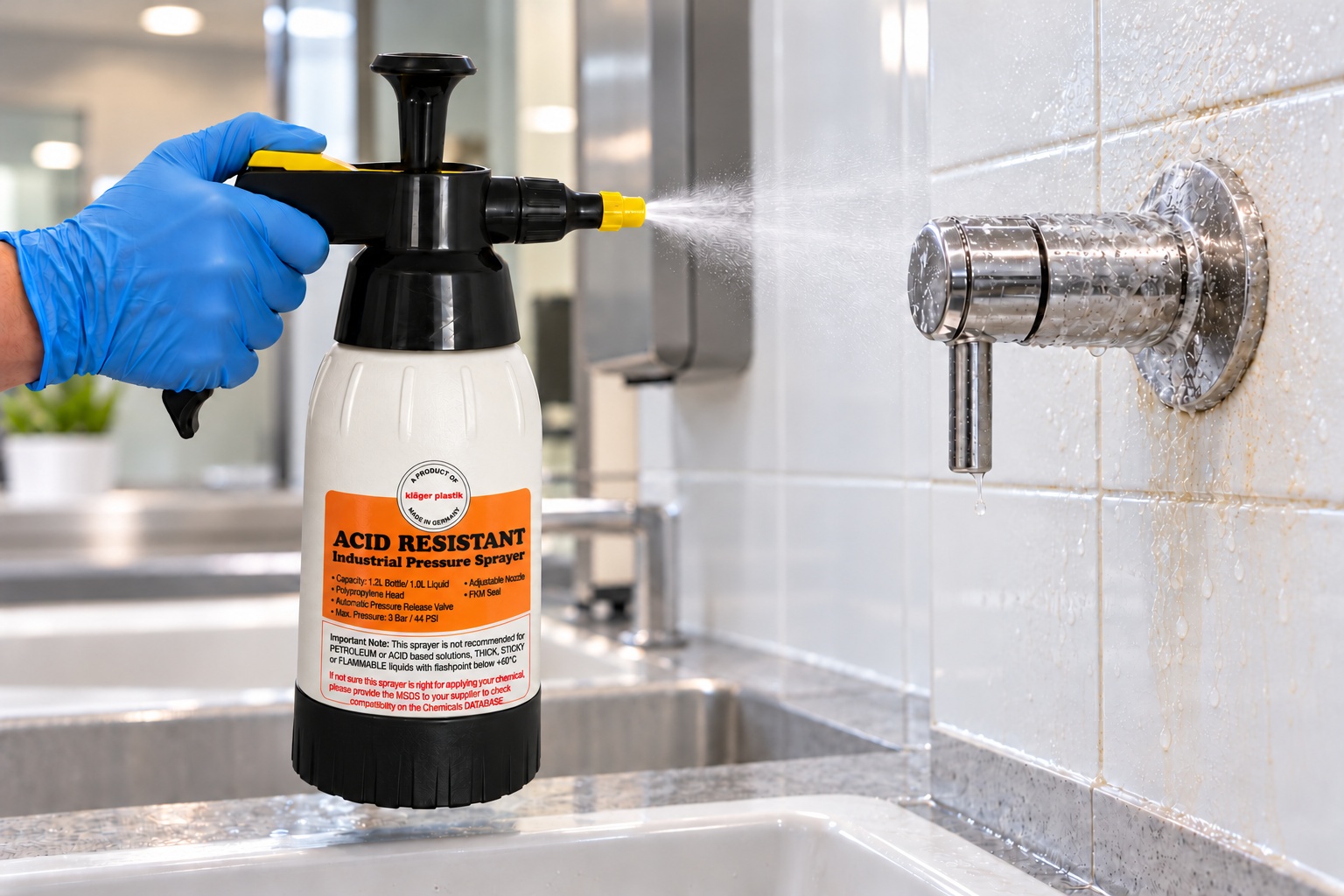
- VITON (FKM) for acid products: toilet and bathroom acid cleaners, descalers, and dilute phosphoric or citric acid. VITON is also used for petroleum solvents and solvent degreasers, but in a different build.
That last point catches people out. An acid sprayer and a solvent sprayer can both have VITON seals, but the pump and body are made differently. In Klager’s range, for example, the acid model is polypropylene and the solvent model is polyamide. One is not a substitute for the other, so a cleaner who uses an acid descaler and a solvent degreaser needs two sprayers, not one.
Check the label, then the SDS
The quickest guide is pH. A strongly alkaline cleaner (pH above about 9.5) goes in an EPDM sprayer, and an acid cleaner goes in an acid rated sprayer. Then look at Section 3 of the Safety Data Sheet. Solvents listed there can change the answer.
Some common sanitisers have no manufacturer rating at all. Quaternary ammonium (quat) products, peracetic acid and hydrogen peroxide aren’t rated in the sprayer makers’ resistance lists we work from, so the honest answer is to ask your supplier, with the SDS in hand, rather than guess.
Habits that make sprayers last
- One sprayer per chemical type, colour coded so nobody grabs the wrong one.
- Never mix chemicals in a sprayer or top up one chemical with another. Bleach and acid cleaners together release chlorine gas.
- Rinse with clean water after use and release the pressure before storing.
- Treat seals as wear parts. Klager, the German sprayer maker, says even a correctly matched sprayer on the harshest chemicals lasts three to six months at best, so keep a seal kit on hand.
Choosing the right sprayer starts with knowing what goes inside it, because the seals decide how long the whole unit survives. EPDM suits alkaline products and VITON suits acids, while solvents call for a different build altogether, so the pH on the label and the solvents listed in Section 3 of the SDS give every cleaner a reliable starting point.
Sanitisers without a manufacturer rating need a conversation with the supplier before they go anywhere near a pump. Colour coded sprayers, a clean water rinse after each shift and a seal kit within reach turn those choices into daily habits, and a cleaner who treats seals as wear parts will spend less on replacements and lose fewer hours to leaks.