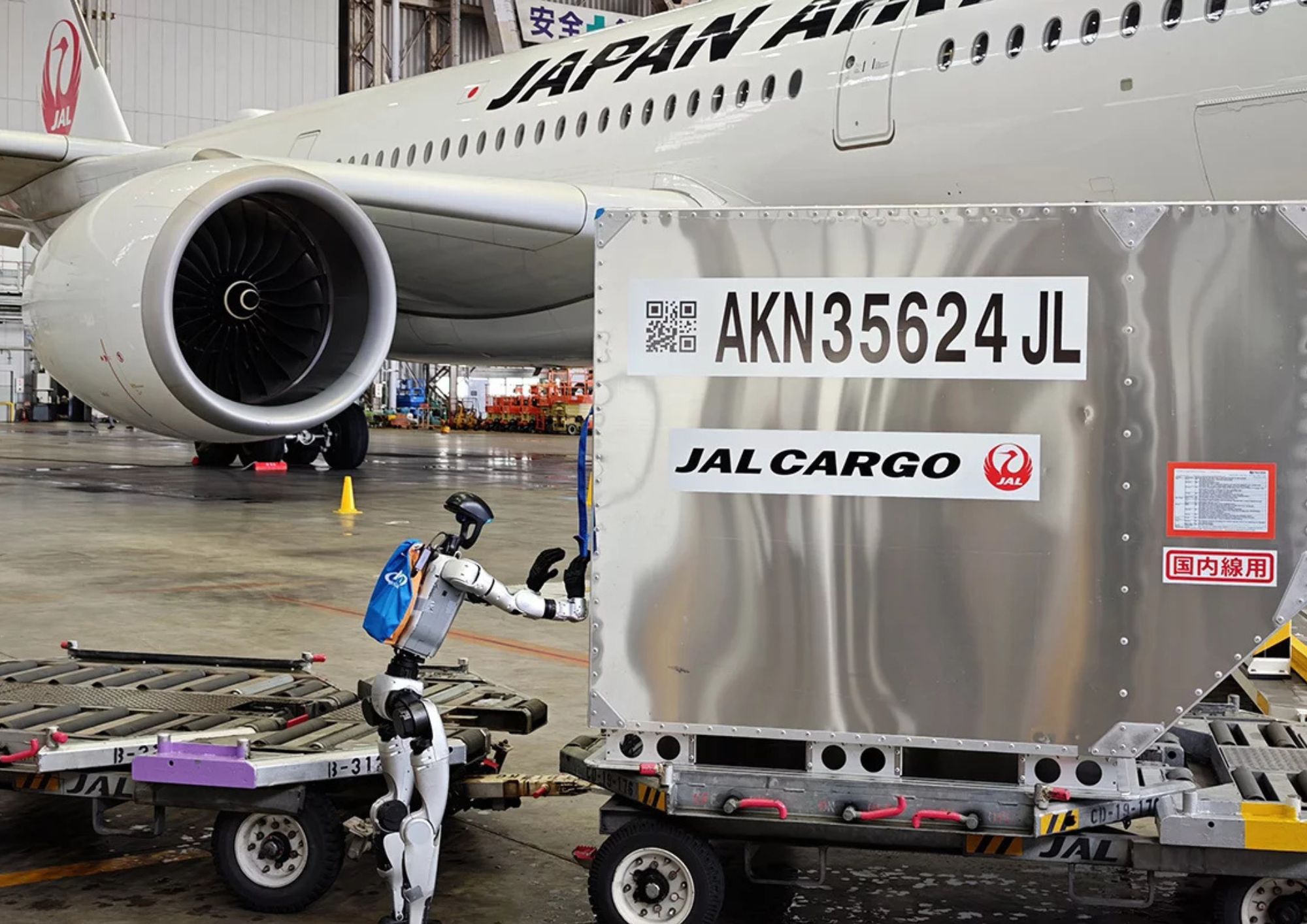
When Japan Airlines announced it would deploy humanoid robots across ground handling operations at Tokyo’s Haneda Airport from May 2026, the headlines focused on automation’s disruptive potential. For cleaning and hygiene professionals, however, the more compelling story lies in what this two-year trial reveals about where robotic technology is genuinely headed and why the industry has more reason for optimism than apprehension.
Developed in partnership with GMO AI & Robotics, the humanoid robots are being trialled across baggage handling, cargo loading and unloading and aircraft cleaning at one of the world’s busiest airports, which handles more than 60 million passengers annually. The scope of the program is significant, but so too is its framing. These machines are being positioned as a direct response to Japan’s acute labour shortage crisis, driven by an ageing population, with the explicit goal of allowing human workers to focus on higher-value responsibilities.
Filling the gap, not taking the role
That distinction matters enormously for Australia’s cleaning sector, which faces its own well-documented workforce pressures. The Robot Factory founder Tom Culver argues the most immediate opportunity is already well within reach. “There are now very few excuses for large-scale commercial floor cleaning to still be done entirely by humans,” he says, pointing to proven technologies already operating across warehouses, airports, shopping centres and healthcare environments. Beyond floors, Culver sees flat surfaces, glass and bathroom cleaning as the next frontier, specifically the kind of dirty, repetitive work he believes should increasingly be handed to machines.
Critically, he frames this as an expansion of human potential, not a reduction of it. “Cleaning professionals will be able to focus on higher-value work such as moving items, inspecting spaces, cleaning detailed or irregular areas, responding to exceptions, managing hygiene standards and upskilling themselves to care for the robot,” he says.
Bringing teams along for the ride
For facility managers considering automation, Culver’s advice is to involve cleaning teams from the outset. “The cleaners doing the work every day understand the real challenges better than anyone,” he says, noting that the most successful deployments occur when workers feel ownership over the technology rather than threatened by it. “The key is messaging. Anyone would be concerned if a robot simply arrived one day with no explanation, no consultation and no training,” Culver says. “But when the message is, ‘This machine is here to take the repetitive work off your plate so you can focus on the higher-value parts of the job’, the conversation changes completely.”
A new service model for a pressured sector
On the question of labour shortages, Culver says robotics is one of the most practical ways to address them without lowering standards. “The cleaning sector is under real pressure. Labour is harder to find, costs are rising and customers still expect consistent, measurable outcomes. Robots can help fill that gap by taking on the repetitive work and producing detailed reporting that shows what has been cleaned, when it was cleaned and how the machine performed.”
The Japan Airlines trial runs through to 2028, with performance carefully evaluated at every stage. For Australian cleaning businesses watching closely, the lesson from Haneda is already taking shape: the robots arriving on the horizon are tools, and their value will depend entirely on the skilled professionals directing their use.