Words: Varun Godinho
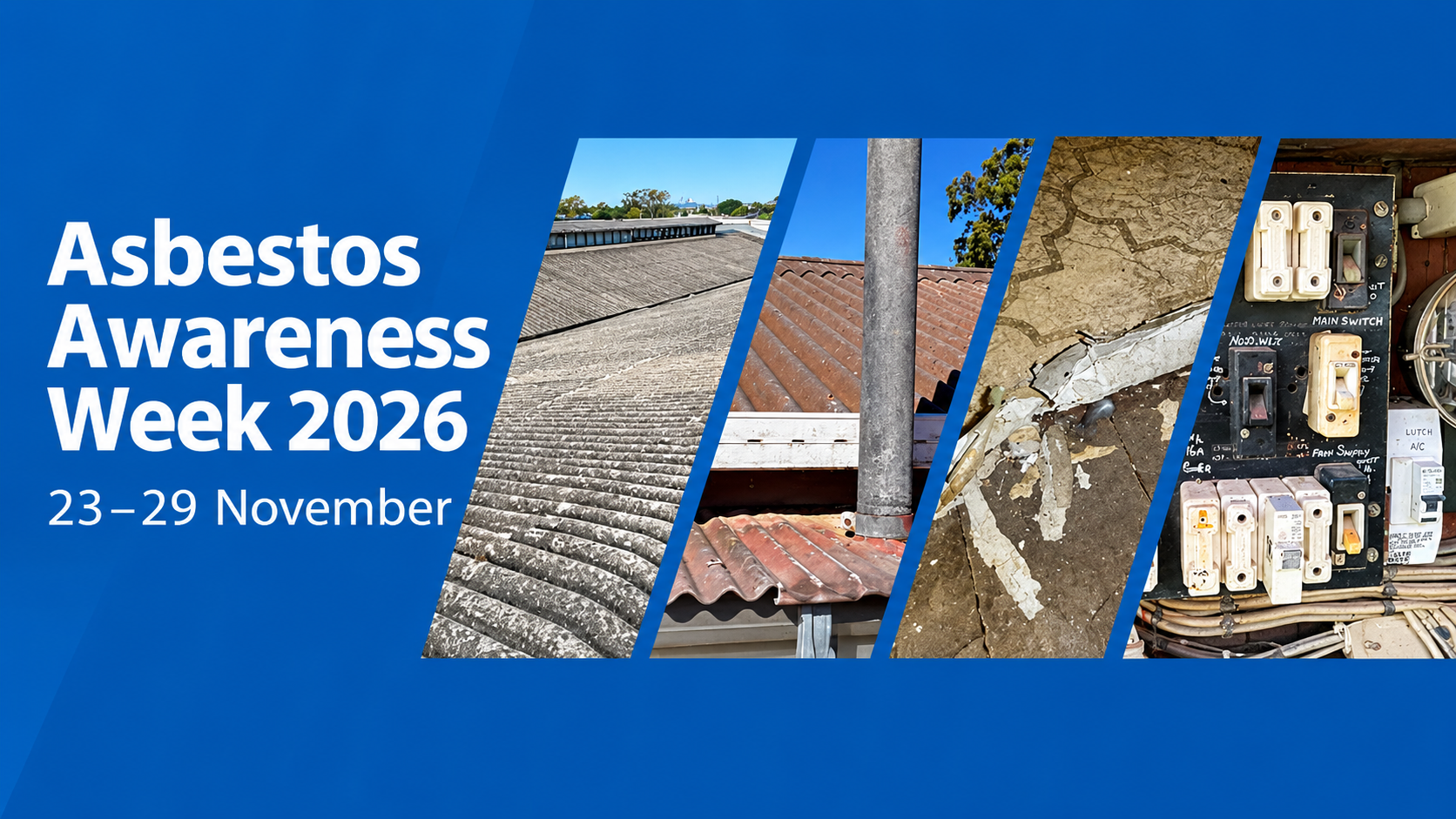
Asbestos Awareness Week 2026 is being observed across the country from 23 to 29 November 2026. The aim is to increase awareness of the risks of living and working with asbestos-containing materials.
The drive to maintain awareness among cleaning crews and facility managers comes amid a backdrop of most homes or workplaces built or renovated before 1990 generally believed to contain asbestos materials.
While those materials are mostly safe if in good condition and left undisturbed, activities such as drilling, sanding, cutting or high-pressure water cleaning – a particular area of attention for cleaning crews – can result in the release of hazardous asbestos fibres.
Common asbestos-containing materials include roof sheets, eaves, gutters, downpipes, vinyl floors, textured paints and insulation.
WorkSafe Australia has stipulated that the workplace limit for airborne asbestos is 0.1 fibres per millilitre of air, averaged over an eight-hour workday.
Individual states are also encouraging vigilance among workers dealing with asbestos.
WorkSafe Victoria has said that despite Australia prohibiting the import, manufacture, supply and use of asbestos in 2003, in the past five years alone, 48 workers have died from asbestos-related occupational illnesses – with more than half working in construction or manufacturing industries.
It said it had also accepted 169 claims from workers who were diagnosed with incurable asbestos-related diseases in the same period.
In Western Australia, the Department of Housing and Works stated that, starting from 30 March 2026, it became mandatory to use a licensed asbestos removal contractor to undertake planned removal of non-friable asbestos-containing material, regardless of quantity.
WorkSafe has recommended a number of measures to control the risk of exposure to asbestos in the workplace:
- Once the presence of asbestos has been identified in a workplace, employers and persons with management or control of the workplace must record this in an asbestos register.
- Employers must also introduce controls where a risk from the asbestos-containing material is identified and engage a licensed person to remove the asbestos from the building or structure.
- A workplace must provide information, instruction, training or supervision about the hazards associated with asbestos and the potential health risk based on the particular circumstances at the workplace.
- Furthermore, atmospheric monitoring results should be readily available and provided to a WorkSafe inspector, if requested.
WorkSafe Chief Health and Safety Officer Sam Jenkin says that preventing asbestos exposure starts with identifying and controlling the risk before beginning work. “The consequences of asbestos exposure can be devastating,” says Jenkin. “Before any tradie picks up a tool, employers must identify whether asbestos is present and ensure appropriate controls are in place to prevent exposure, including engaging a licensed asbestos removalist when needed.”
In the past five years, WorkSafe confirms that it has prosecuted 15 duty holders over asbestos-related health and safety failures, resulting in more than $262,000 in fines and court costs.