Over two decades, hard-surface porcelain has grown from simple 300-millimetre squares into large architectural panels that dominate design schemes. That growth has turned a favourite of the cleaning world into a source of frustration for facility managers, because many believe the material needs no upkeep.
Finishes that mimic hand-scraped timber, tumbled stone or industrial concrete look spectacular, but their microscopic nooks hold grimy liquid that string mops smear across the floor as a thin layer of biofilm. A matte surface turns grey and dingy. Grease in the pores can make the tile hazardous underfoot. Australian Robot Technology (ART) sales director Greg Crisp describes the problem crews face. “Textured, high-definition porcelain traps soil in its slip-resistant micro-profile, where mops simply spread dirty water.”
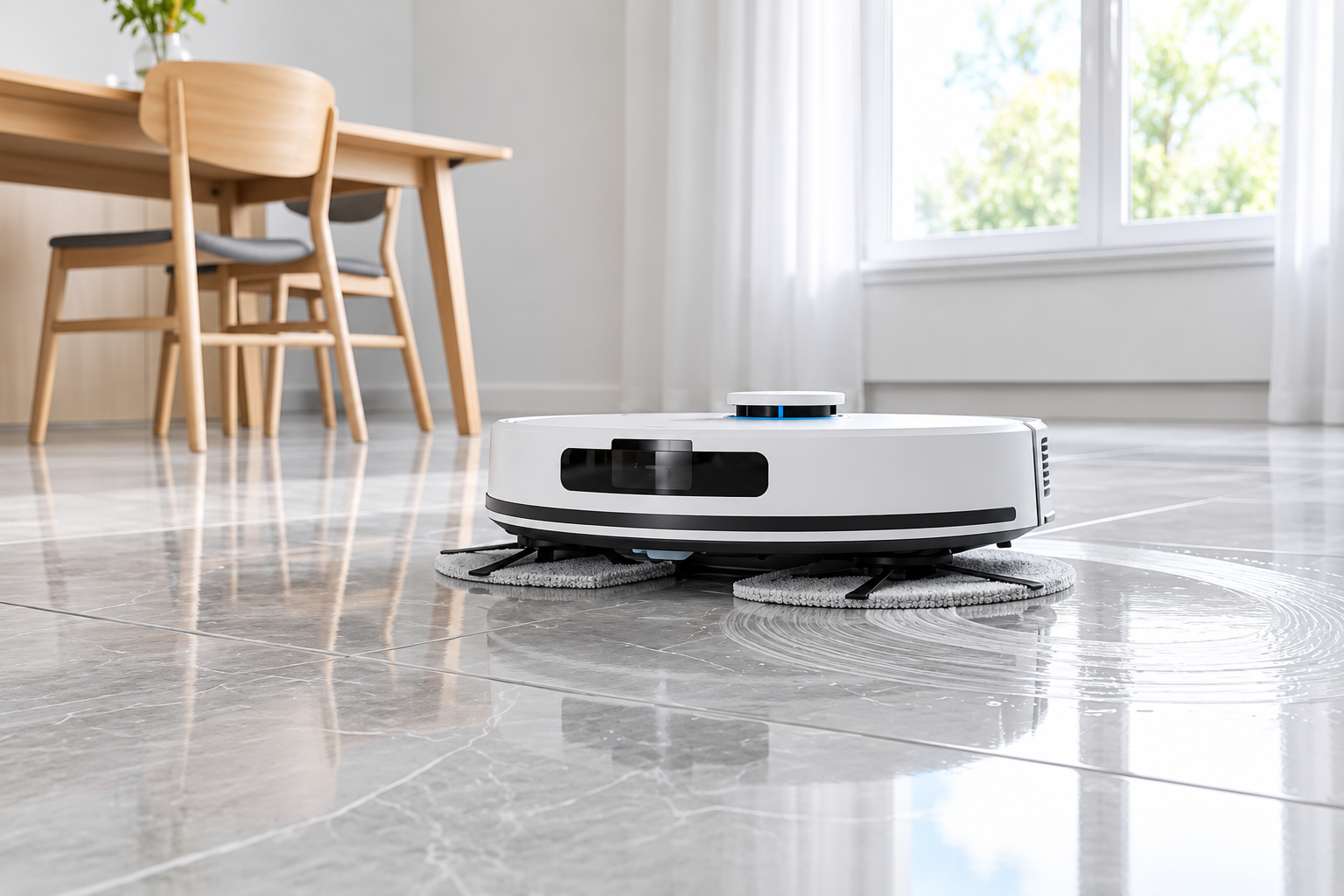
Mechanical agitation offers the practical answer. Crisp says robots deliver it with a discipline that manual operation struggles to match over weeks of routine cleaning. “Autonomous scrubber-dryers apply the same brush pressure, overlap and solution rate on every pass, so they reach into the texture and lift soil out night after night.”
Many tiles sold as porcelain fail to meet the standard that defines the material, because true porcelain absorbs 0.5 percent water or less under AS ISO 10545.3. The market holds plenty of soft-body products with higher porosity than their labels suggest. A floor that darkens when wet is likely one of them. Contaminants that penetrate such a tile can leave a lasting stain, so managers should verify their materials before they set a cleaning program.
Haze, grout and run time
Gauged porcelain tiles reach sizes such as 1.5 metres by three metres, which exposes every trace of residue from poor cleaners or mineral deposits in tap water on their flat surfaces. Rectified edges add a complication because grout joints as narrow as 1.5 millimetres trap liquid and soil. Crisp points to machine design as the answer to both problems. “Robots scrub and vacuum-recover in a single pass and dose low-residue chemistry precisely. This prevents the detergent build-up that dulls large-format panels and erodes the slip rating for which the floor was specified.”
Large floor areas need long cleaning windows, which makes battery performance critical. Crisp says advanced lithium technology gives scrubbers up to three times the run time of lead-acid machinery, with faster charging and no watering.
Asset owners want proof that a cleaning program protects the finish. “Every clean is also logged, giving facility managers auditable evidence of performance and supporting AS 4663 slip-resistance compliance.”
Large open areas of rectified, narrow-joint tiles suit autonomous operation. Crisp sees the biggest gain in workmanship. “While the robot runs its route unattended, cleaners have extra time for the detailed work that lifts overall quality: edges, corners, touch points, spot treatment and amenities.”
Facility managers who treat porcelain and grout as one flooring system, verify their materials and invest in specialised equipment will retire 20th century tools from 21st century floors.