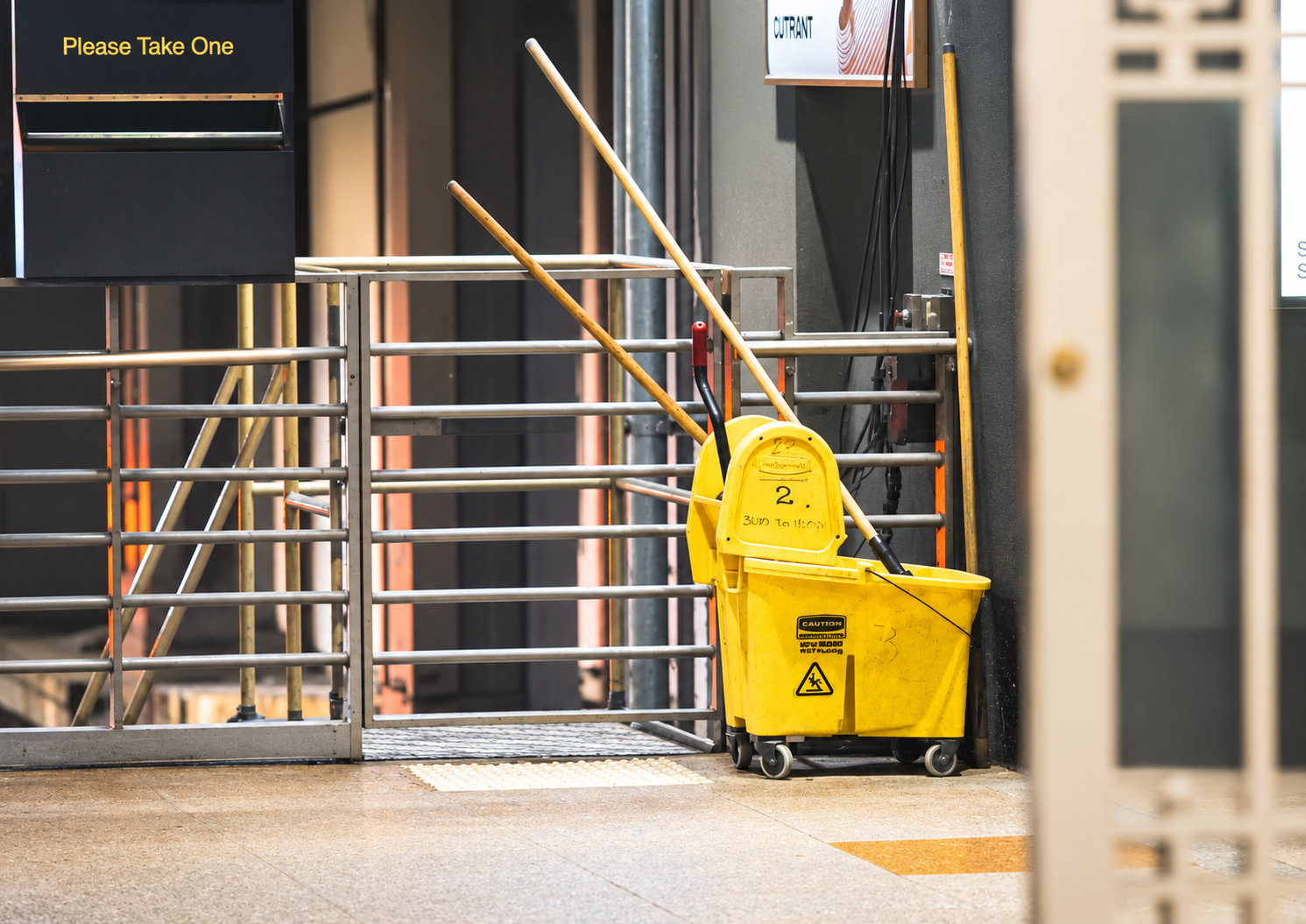
Good housekeeping shapes how safely and how well a workplace runs, and a business that treats cleaning as a core safety function rather than an afterthought tends to see fewer incidents on-site. Wet floors, cluttered walkways and blocked exits create real risk for workers, contractors and visitors alike. Safe Work Australia attributes more than 25 percent of serious injury claims to slips, trips and falls, and many of these incidents trace back to basic housekeeping that fell through the cracks.
Matthew Walker, founder of Valory AI, sees the same pattern play out across the cleaning businesses he works with. “A lot of issues come back to unclear ownership and poor handover between people,” he says. “If something is noticed but there isn’t a clear process for who needs to action it, when it needs to be done and how it gets escalated, it can easily fall through the cracks. Time pressure and teams moving between multiple sites can make that worse.”
Clean Focus chief operating officer Niki Trimboli recognises the similar issues across the larger commercial sites her teams manage. “The most common issues are usually quite ordinary: equipment left in walkways, waste accumulating, spills not dealt with quickly, stock or deliveries creeping into access areas,” she says. “The problem is rarely that nobody cares. It’s usually that nobody is quite sure who owns it.”
With hundreds of people moving through a building and multiple contractors on-site at once, she says Clean Focus puts heavy emphasis on accountability, training staff to flag anything out of place even when it sits outside their own scope.
Pressure on lean teams
Cost and time pressure also shape how much of this actually gets done, and both experts describe a market under strain. “Cleaning businesses are generally trying to do more with fairly lean teams, so there is a big focus on keeping staff focused on the work that actually needs to happen on-site,” Walker says. He highlights admin load as a common drain on that focus, noting that some cleaning clients turn to tools like his to take pressure off staff answering phones, capturing enquiries and passing information around, freeing the team to concentrate on service delivery instead of constantly managing admin.
Trimboli concurs, saying she is wary of treating speed as the answer. “Labour pressure is real, particularly on large contracts, but asking people to simply work faster is not a sustainable answer,” she says. “We’ve become more deliberate about deployment, working out who needs to be where and what they should be watching for while they’re there.” A cleaner moving through a building sees an enormous amount. Trimboli says her business trains their teams to recognise patterns, not just complete tasks. “A recurring spill, a waste point that consistently overflows or an area deteriorating faster than expected can tell you something about how the building is operating,” she adds.
What a failure on-site reveals
Trimboli has direct experience of what happens when housekeeping breaks down before a new contract starts. “We’ve taken over sites where back-of-house areas had effectively become unofficial storage zones,” she says. Boxes, equipment and stock had built up gradually around service and access points. Clearing the mess was the easy part, she says, the harder task was understanding why it had happened.
“Often, the site had plenty of policies and reporting processes, but there was a disconnection between what was documented and what was actually happening on the floor,” she explains. Her conclusion is blunt: reports describe what happened, but only people on the ground can explain why, and even the best safety systems still depend on staff who are paying attention and empowered to act.
Accountability makes the difference
Both of the experts INCLEAN speaks with land on the same fix, framed slightly differently. Walker’s advice is procedural. “I think a simple improvement is having one clear process for recording, assigning and escalating housekeeping issues,” he says. “Whether that is a checklist, a system or even a structured handover process, the important part is removing ambiguity around who owns the issue and making sure it doesn’t disappear between shifts or teams.”
Trimboli’s version is about friction. “Make reporting a small issue incredibly easy,” she says. “Staff who spot a spill, a damaged fitting or a blocked access point should know exactly who to tell and be able to act immediately. She says the longer the reporting chain, the greater the chance that a small issue becomes somebody else’s problem. “Housekeeping works best when the people closest to the building are trusted to speak up early, and someone is accountable for closing the loop.”
The businesses that get the most out of housekeeping treat it as part of daily work, not a separate task bolted on to the end of a shift. Ownership, not extra effort, is what closes the gap between a policy on paper and a site that actually stays safe.